Mistral Small & Mistral-NeMo: Edge Inference & High-Throughput Economics
Engineering review of Mistral's lightweight parameter class, highlighting the Tekken tokenizer, FP8 quantization characteristics, and single-card deployment mechanics.
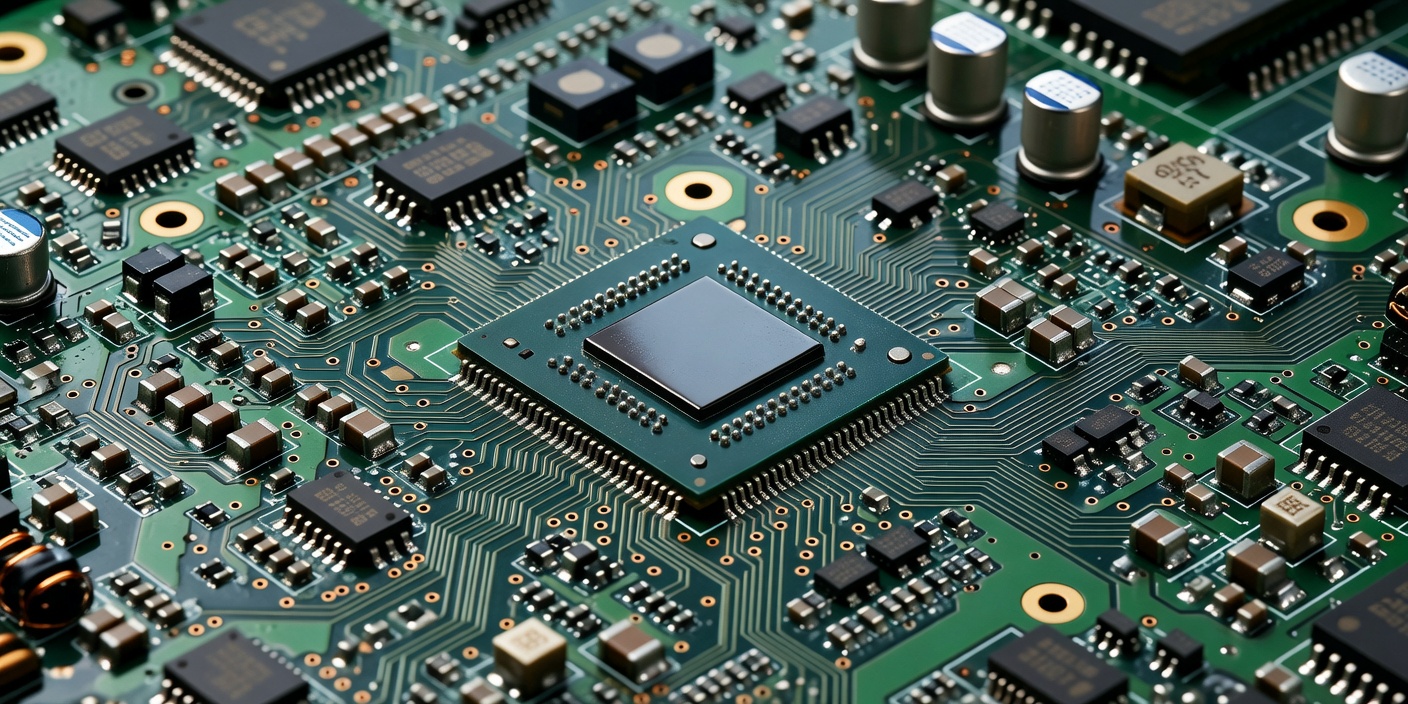
While hyper-scale AI models dominate benchmark discussions, real-world software engineering demands high token velocities, low per-request expenditures, and predictable operational latency. Mistral’s lightweight series—encompassing the seminal Mistral 7B, the 12B Mistral-NeMo collaboration, and the 24B Mistral Small variant—addresses this operational necessity. These models are purposely engineered to fit within memory budgets of commodity workstation GPUs and enterprise edge clusters without requiring multi-node networking fabrics.
A notable technical innovation in the compact family is the introduction of the Tekken tokenizer. Featuring a 131,072 token vocabulary trained across more than 100 languages and programming dialects, Tekken delivers substantially better compression efficiency compared to legacy TikToken architectures. By compressing multi-lingual texts and code with fewer tokens per concept, inference speeds increase proportionally while GPU memory requirements drop dramatically.
The Tekken Tokenizer & Compression Metrics
A primary bottleneck in lightweight models has historically been token waste: non-English languages frequently required 2 to 3 times more tokens per sentence, multiplying latency and cost. Tekken rectifies this disparity through expansive subword optimization.
| Model Variant | Active Parameters | Context Window | VRAM (FP16) | VRAM (4-bit Quant) | Optimal Hardware |
|---|---|---|---|---|---|
| Mistral 7B (v0.3) | 7.24 Billion | 32k Tokens | ~15 GB | ~4.8 GB | RTX 3060 / 4060 or Apple M-series |
| Mistral-NeMo 12B | 12.2 Billion | 128k Tokens | ~25 GB | ~7.8 GB | RTX 4090 / 1x A10 or Apple M2/M3 |
| Mistral Small 24B | 24.0 Billion | 128k Tokens | ~48 GB | ~14.5 GB | 1x A100 (40GB) or 2x RTX 3090/4090 |
Operational Advantages for Production Systems
Deploying compact models yields substantial structural dividends when building enterprise workflows:
- Data Residency & Air-Gapping: Compact weights can run completely disconnected from the public internet on localized edge servers, satisfying military, healthcare, and banking sovereignty directives.
- High Token Throughput: Smaller layer depth enables token streaming rates exceeding 80–120 tokens/sec on modern Tensor Core hardware using vLLM or llama.cpp.
- Domain Specialization via LoRA: The 12B and 24B parameter counts represent the ideal balance for targeted Low-Rank Adaptation (LoRA) fine-tuning without catastrophic forgetting.
Engineering Realities & Boundaries
Primary Use Cases
Real-time customer-facing chat, classification pipelines, initial AST-level code suggestions, local document summarization, and embedded device processing.
Architectural Limitations
Compact models show reduced nuance on subtle multi-step deductions, extensive counter-factual logic, and highly ambiguous tool-chain calls compared to 70B+ or frontier dense systems.